


The U.S. economy reiterated its enduring strength this week. August data showed that the labor market was healthier than expected, and business activity points toward further economic expansion. Sounds good! Unfortunately, inflation remains elevated and may require a firmer hand to bring it under control.
This leaves the September 16 Federal Reserve meeting very much in flux. Governor Christopher Waller’s comments about leaning toward holding rates steady brought odds of a September hike from 60% to 50%. Friday’s data pumped it right back to 60%.
If the Federal Reserve does hike—and it might be a when, not an if at this point—it would mark the first policy rate increase since July 2023. The CPI report on September 11 could be a deciding piece of evidence. Stay tuned.
Labor Day-ta Weekend
August’s payroll gain was a major upside surprise, particularly with July’s 44,000 upward revision erasing the entirety of the negative report. Job growth was broad, with gains across most sectors, while the unemployment rate remained steady even as labor force participation increased to 61.6%. That combination suggests labor demand remains strong enough to absorb new workers without pushing unemployment higher.
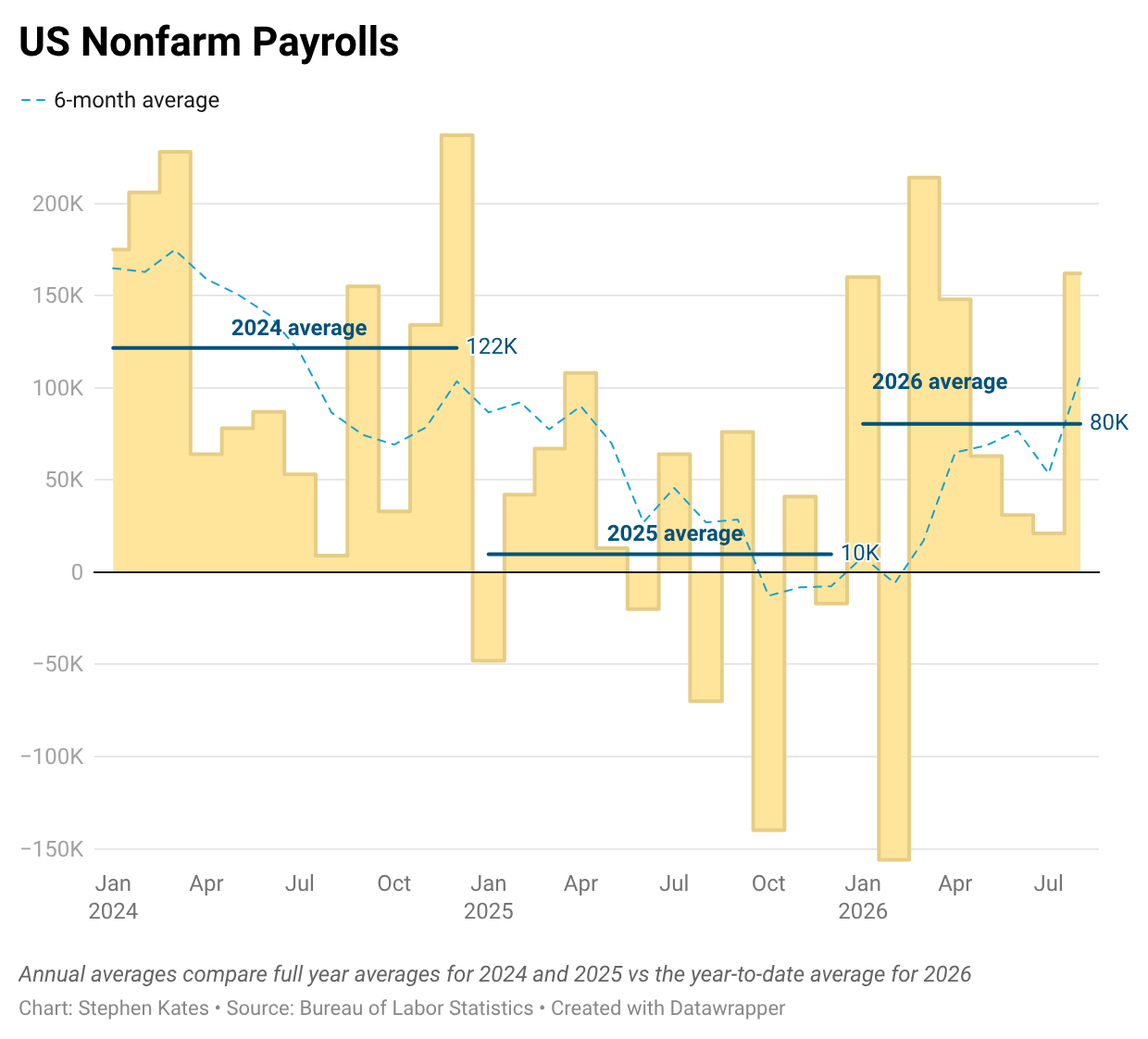
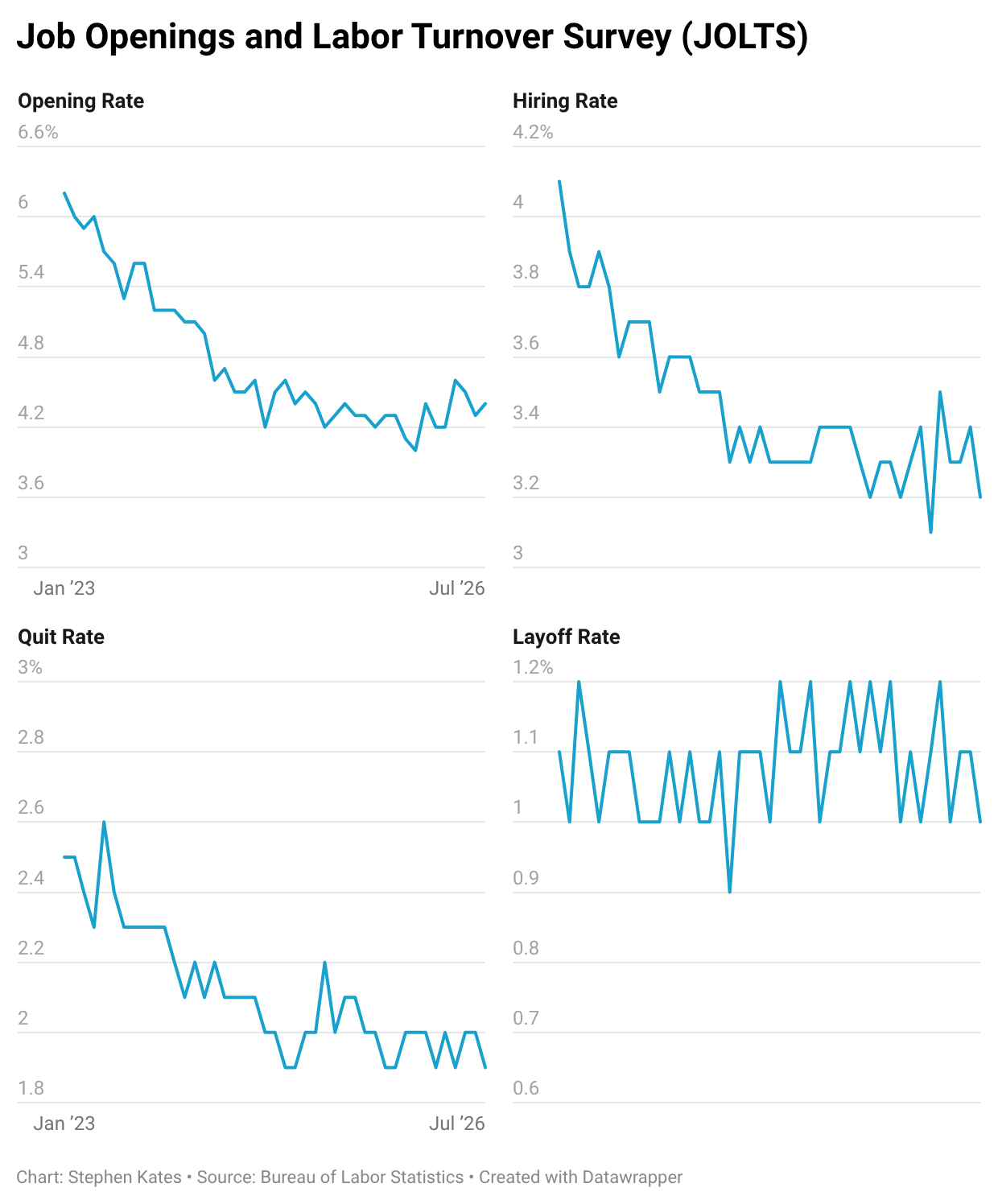
The wage data, however, may give the Fed some breathing room. Annual wage growth slowed to 3.1%, the lowest reading since 2021, and has averaged about 3.5% this year. Sluggish hiring and a low quit rate are keeping employed workers in their current jobs, and unemployed people sidelined longer.
The JOLTS hiring rate of 3.3% in 2026 more closely resembles the post-GFC period than anything close to normal. 2019 averaged a hiring rate of 3.9%, while the red-hot job market following the pandemic averaged 4.3%.
Alternative labor data sources came in more muted, with ADP reporting just 38,000 private-sector jobs added in August and Revelio Labs reporting 36,500. Taken together, the labor market looks healthy, but not uniformly hot. Payroll data needs a few months to be properly baked, so these numbers should be viewed as preliminary only.
Hot or not
The stronger jobs report would normally argue for higher interest rates, but the inflation picture continues to be nuanced. Headline CPI inflation has been around 3.4% (Core CPI is 2.5%), well above the Fed’s 2% target, yet the last two readings have come in at or below recent expectations. Federal Reserve Governor Waller indicated this week that continued cooling inflation would make him inclined to keep rates unchanged. Following the hawkish comments from Kevin Warsh at Jackson Hole, this speech might have included a little bit of narrative control to balance the scales.
The bar for a hike in the next two meetings is higher than it might have been, all else being equal, given the midterm elections coming soon. In a perfect world this wouldn’t matter, but you’re fooling yourself if you think that won’t register with the policy committee given the abuse the administration as directed at the Fed in the past. Regardless, I expect this month’s vote will be a tight one with numerous dissents, whichever way it lands.
That makes next Friday’s CPI report especially important. Expectations call for headline inflation to remain at 3.4%, while core CPI is expected to ease from 2.5% to 2.4%. If inflation continues to cool while wage growth remains contained, the case for holding rates becomes stronger. Another acceleration in prices would point in the other direction.
Broader business data out this week is still proving resilient. The ISM manufacturing PMI stayed in expansion territory for an eighth straight month, while services activity accelerated. Both surveys showed persistent price pressures, which feed into the inflation conundrum. Services prices paid reached a four-year high.
What this means for investors and what’s next
The September Fed decision, and the markets’ reaction, hinges on whether recent inflation is improving steadily enough to continue to hold. If the downshift this summer only proves to be a temporary reprieve, a hike may come in December.
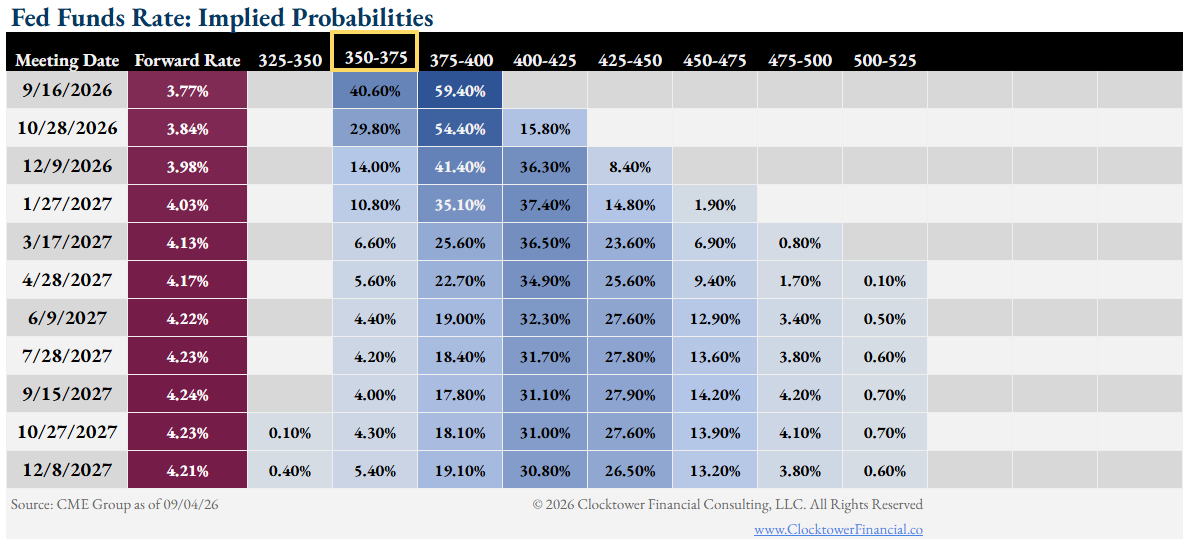
For investors, if you take anything away from this week, it is that the economy remains resilient, but inflation and monetary policy are likely to keep volatility elevated as the Fed approaches its September decision. Investors should watch Friday’s CPI report closely but avoid treating this or any report as a decisive prediction of what’s to come.
