


As we look toward September, investors have something special that has been in short supply over the past year or so: a little clarity. It was a packed week for both economic and market news. Some was good, and some was bad.
Three of the top headline-makers were NVIDIA earnings, personal consumption expenditures, and Fed Chair Kevin Warsh’s Jackson Hole speech. In addition, we also got new home sales data, updated Q2 GDP, and the BLS’s payrolls benchmark revision. More than enough to chew on for any week, so I’ll do my best to cut through the noise.
It was a mixed week for markets, with the S&P 500 and Nasdaq Composite posting gains while mid- and small-cap stocks slipped. Technology led the advance, while energy, utilities, and manufacturing lagged.
If we boil this week down, the events of this week continue to lay out more evidence that the AI trade, inflation, and the debt markets are the major themes that will shape the next year or two. AI spending remains robust, and the Fed is still focused squarely on inflation. That does next to nothing to eliminate risk, but it gives investors a foothold as we head into a seasonally challenging month.
Your move, AI skeptics
NVIDIA has become the market’s de facto barometer for the health of the AI ecosystem each quarter, and the latest results delivered plenty of evidence that there is still gas in the tank. Fiscal second-quarter revenue surged 106% year-over-year, extending the company’s streak of earnings and revenue beats to 15 quarters. Management also issued strong guidance, with projected revenue growth of roughly 70% next year compared with analysts’ expectations of roughly 46%.
NVIDIA committed that its outlook is still supply-constrained. Customer demand forecasts imply growth close to 100%, suggesting the challenge is not finding buyers but producing enough to meet demand. NVIDIA’s shares jumped almost 9% on Thursday, giving a boost to the whole technology sector. By market close on Friday, the stock gave a lot back, but it still ended positive for the week.
The AI debate is far from over, but the burden of proof falls back on the AI skeptics that the investment cycle is losing steam. While the narrative is slowly shifting from a focus on spending volume to monetization, the open question of returns hasn’t derailed the thesis yet.
Investors need to be trying to uncover how and when billions of dollars in AI infrastructure will produce attractive returns, but blowout earnings will continue to kick the can down the road. Higher costs could add another wrinkle, with NVIDIA announcing roughly a 15% increase in chip prices to offset rising memory costs. However, their customers do not appear to be backing off.
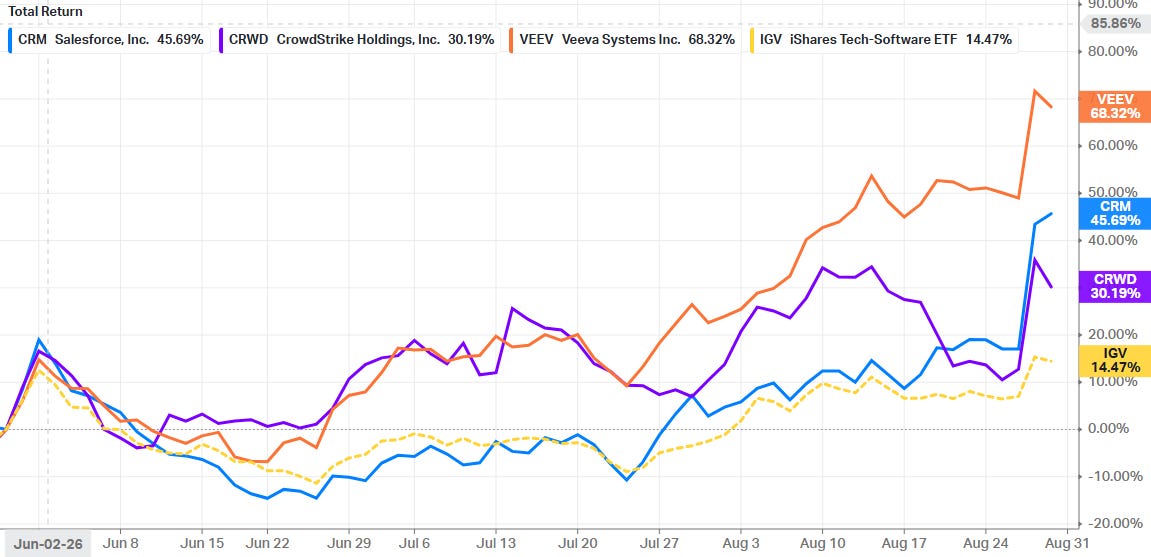
The strength is also spreading beyond semiconductors. Salesforce, CrowdStrike, and some lesser-known names like Veeva Systems delivered compelling results, helping dismiss the idea that AI will slowly erode the software industry. After lagging the broader market since peaking in early June, technology is a strong performer again.
Warsh sets his sights on inflation
If NVIDIA clarified the growth story, then Warsh clarified the policy story. His Jackson Hole speech struck a surprisingly hawkish tone. He reaffirmed that the Fed’s 2% Personal Consumption Expenditures (PCE) inflation target remains firm and that inflation is still too high to declare victory. He also suggested that further tightening remains possible if inflation does not move toward target clearly and quickly enough.
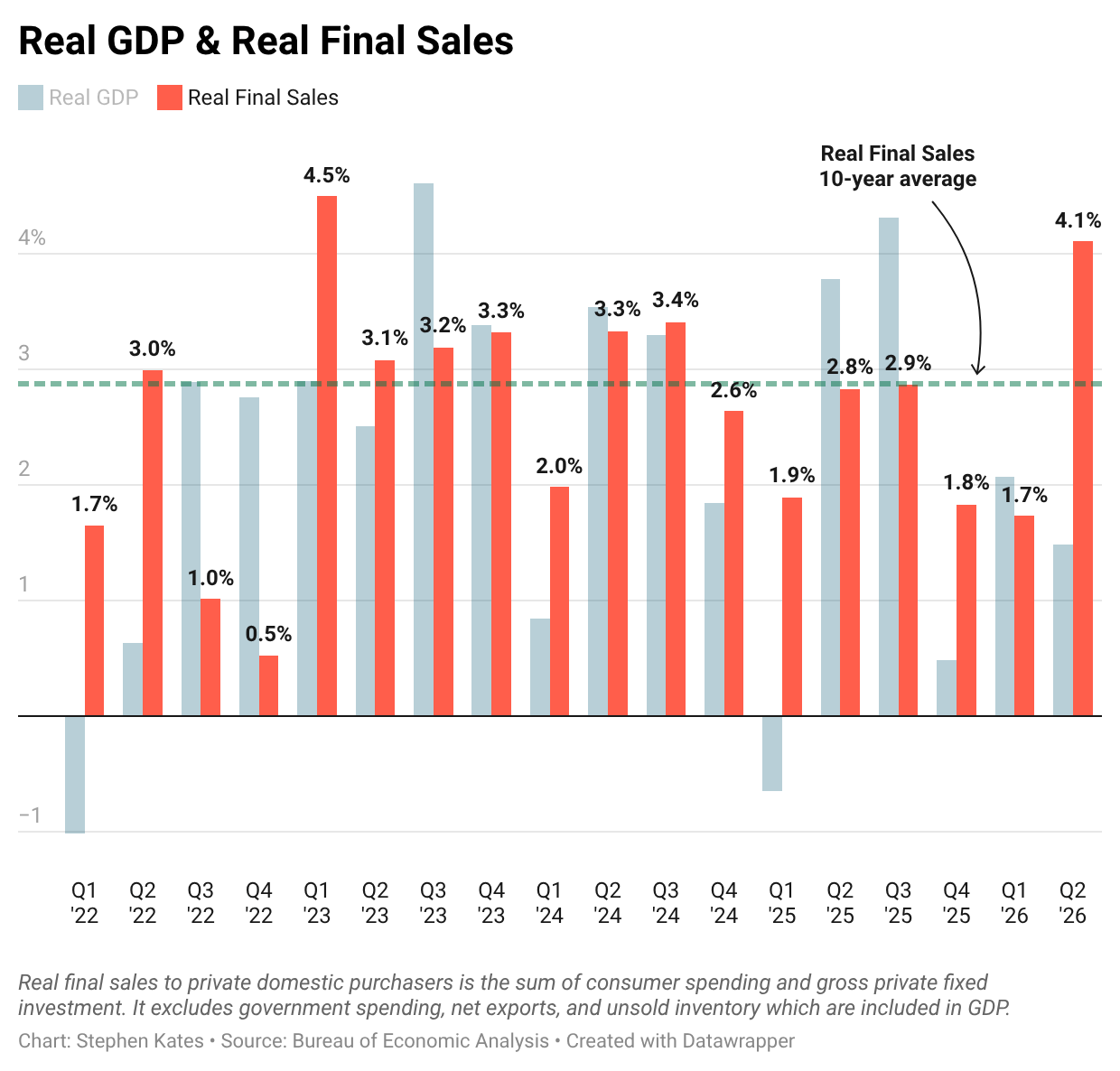
The July PCE report and August forecasts reinforce that concern. Headline inflation rose 0.2% for the month and 3.7% year over year (above expectations), while core PCE increased 0.2% and 3.3% year over year (matching expectations). On the other side of the dual mandate, the labor market remains stable. Domestic demand is also continuing to surprise to the upside. In a nutshell, there is not much evidence that the economy is falling apart (despite the protests of numerous LinkedIn lurkers).
Markets responded by raising the implied probability of a September rate hike to roughly 60%, up from about 35% before Warsh’s speech. Short-term Treasury yields moved higher, while the 10- and 30-year yields rose more modestly, flattening the yield curve but keeping borrowing costs high.
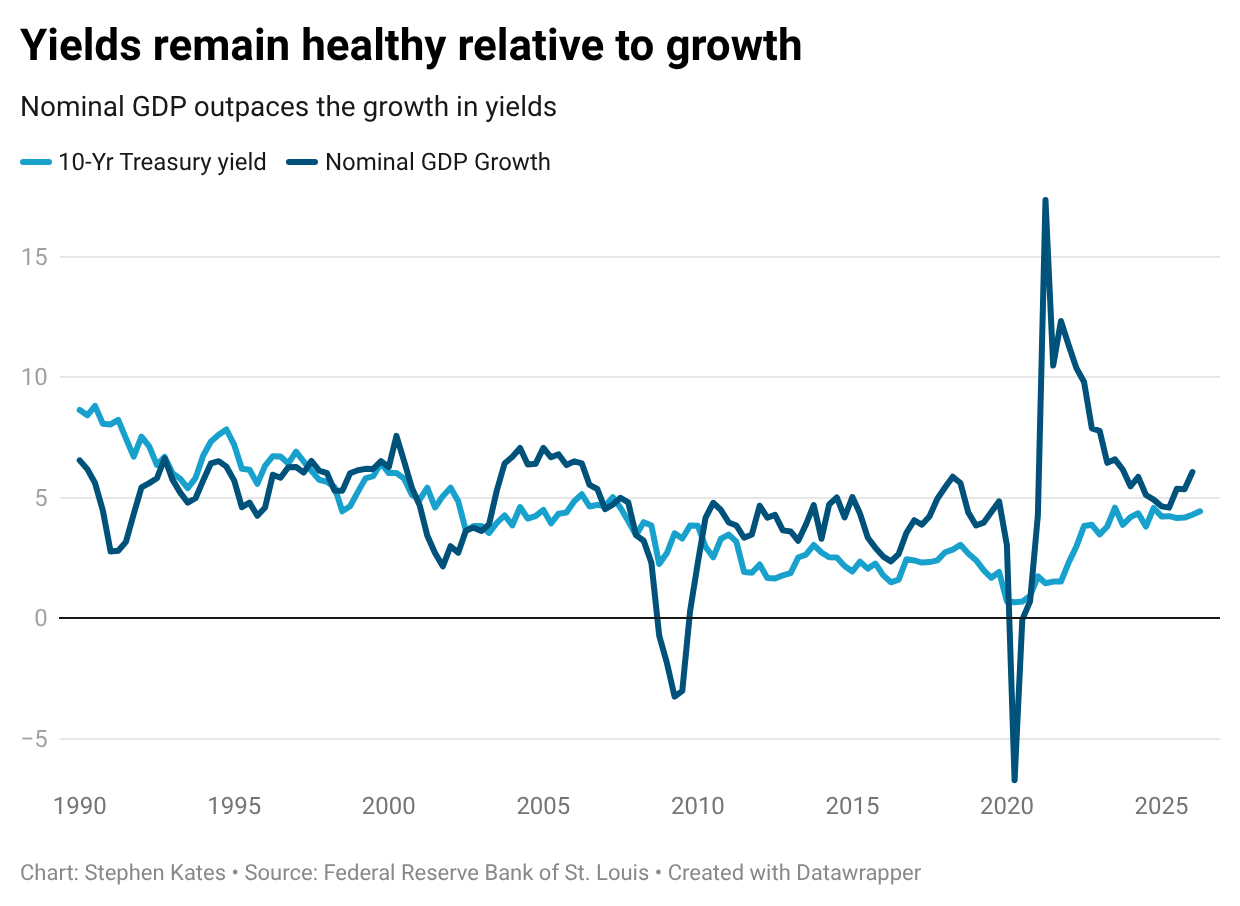
Higher rates remain a headwind, but they are not necessarily a recession signal, excluding a government debt spiral. Earnings growth is projected to stay remarkably strong and GDP growth is outpacing 10-yr yields, so elevated yields may only constrain valuations rather than trigger a broader market downturn.
With Q2 earnings wrapping up, 88% of reporting S&P 500 companies beat bottom-line estimates, and earnings growth is tracking around 52%, or roughly 26% to 29%, if we exclude the one-time mega-cap technology investment gains.
What this means for investors and what’s next
September’s reputation as the weakest month for stocks deserves real respect, particularly during a Midterm Election year, but seasonality isn’t a crystal ball. There are a variety of tailwinds that could propel the market into October and beyond. AI demand remains strong, economic activity remains resilient, credit spreads are tight, and financial conditions are loose-ish.
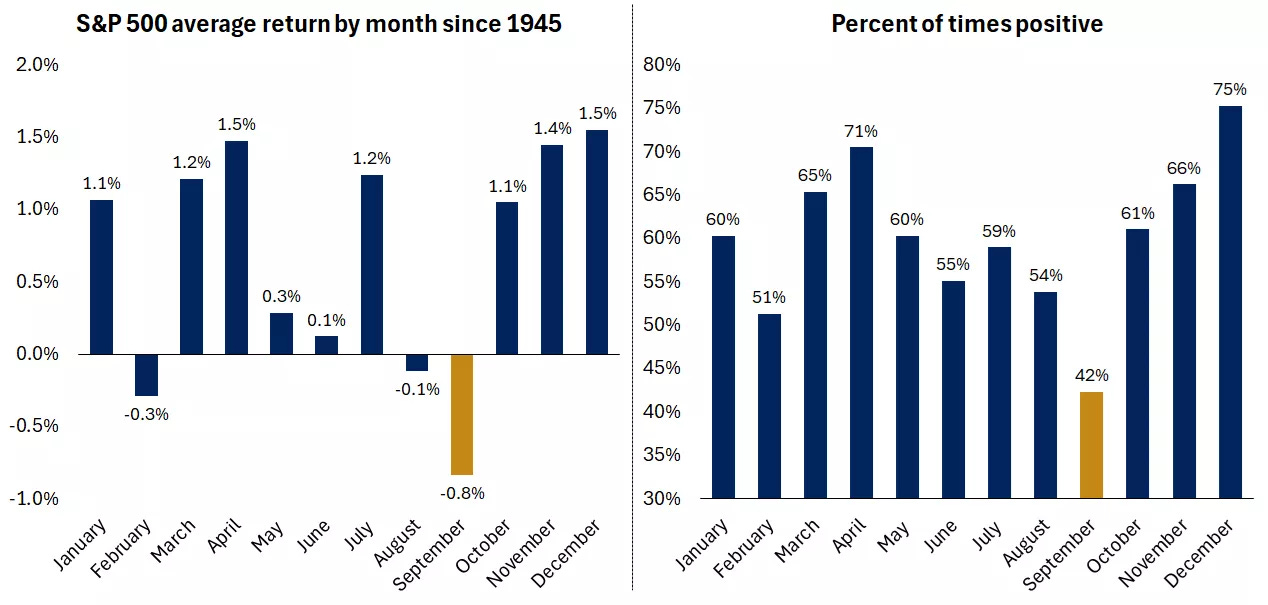
Source: Edward Jones
The biggest near-term catalyst will be Friday’s employment reports, which could either reinforce the case for higher rates or ease some of the pressure on the Fed depending on the headline report and prior revisions. For investors, the message is still straightforward. Watch your position sizing and risk management, but do not confuse seasonal or pre-election volatility with a change in the broader trend.
