


The architect of D-Day coined a line that has outlived most of the plans it describes when he turned a contradiction into an aphorism.
“Plans are useless, but planning is indispensable.”
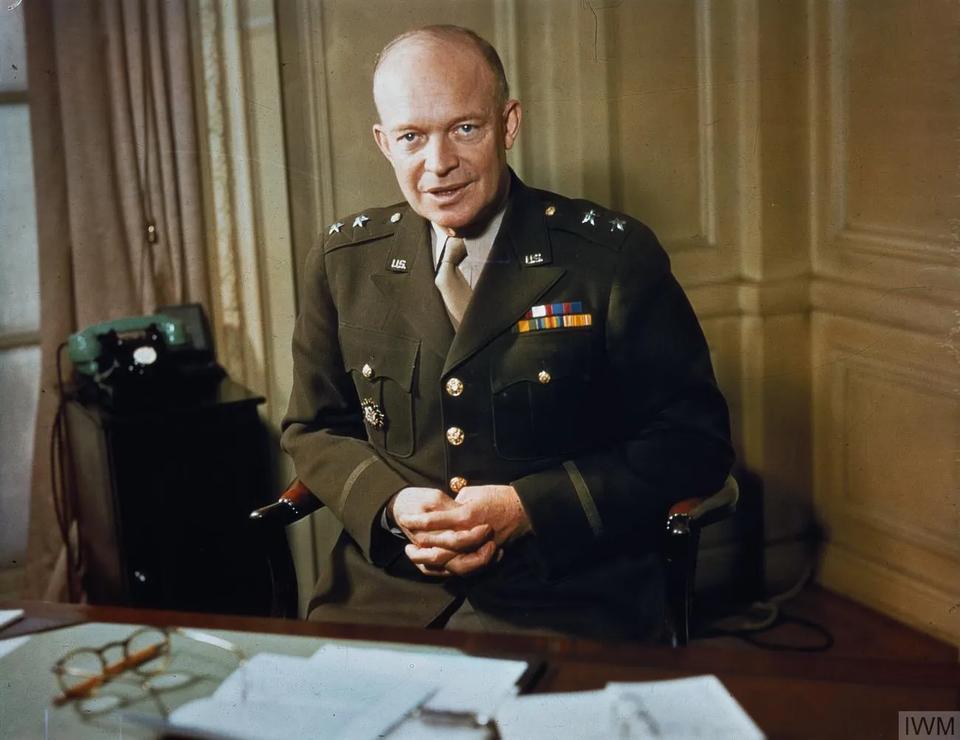
Thanks Dwight! Also for saving the Free World!
Planning has been a prism for Age Against the Machine since the beginning. We’ve examined how the process forces us to think ahead, identify what could go wrong, and consider what resources we might need. Ultimately planning is an exercise in finding options and their trade-offs.
But then reality shows up, and reality has clearly not read up on the financial plan. Hopefully the planning process provides enough of a head start in disciplined steps to make a positive impact on decisions, particularly under stress.
Those decision-making steps are:
- Know what your current situation is, even if there are a lot of unknowns. Organize your information, and remember that denial isn’t helpful.
- Articulate your priorities, force ranking them if necessary. There can only be one most important next thing to decide.
- Understand what your choices are and what the trade-offs might be. Beware of waiting for perfect information which rarely arrives.
- Make a choice with intention. Do not skip Steps 1-3.
- Monitor the results of your choice. Did the results meet expectations?
- Evaluate results of the decision and start the process at #1 again.
The difference between the financial plan and successfully executing these steps is a big reason I’m starting Healthspan Wealth.
Aging is a cloud problem
Earlier this year, I wrote about philosopher Karl Popper’s distinction between clock and cloud problems. Clock problems are closed, orderly and reasonably predictable, often following mathematical or probabilistic rules. Cloud problems by contrast are complex, dynamic, adaptive, and at least partially unknowable.
Sometimes financial plans lend themselves to clock-problem thinking. If money just follows some orderly rules, then the probability of better outcomes can be improved.
However, people are cloud problems. Families are definitely cloud problems. Aging may be one of the cloudiest problems we ever encounter.
Yet much of traditional planning attempts to impose clock-like precision on aging. Planners like me estimate longevity, project lifestyle and healthcare costs, model investment returns—all while calculating the probabilities of success. This process grounds what is most defensible in a fiduciary ”act in the best interest of your client” framework. All useful.
But Popper’s more important point wasn’t simply that the world is unpredictable. It was that all knowledge is provisional.
Remember that all the models we use are extrapolated guesses, simplified representations of reality based on assumptions of how things work. The forecasts we make are versions of, ”based on what we know right now and what has happened in the past, here is what we think is likely to happen next.“ The very best planners tend to use the planning process as sandboxes to practice the decision-making steps listed above.
Progress doesn’t come from constructing a plan that is permanently right. It comes from discovering where the plan is wrong and correcting it quickly. That feels especially relevant to aging.
Healthspan makes the problem even cloudier
Lifespan is generally well understood. Healthspan, alternatively, is the period when we maintain our health, independence, and ability to make decisions for ourselves, and is materially harder to pin down.
Consider all the things we don’t know if or when they will change. A partial list of plan-wreckers:
- Which spouse will need help first
- Whether the children will live nearby
- Whether Mom will accept help
- Whether Dad will still be capable of managing the finances
- If adult children are capable of the kind of support needed
- How professionals serving the family coordinate and align advice
- When someone will die
These aren’t examples of why plans fail! Rather, they are reminders that planning has limits. The mistake is treating the plan as an answer instead of a hypothesis.
Families become accidental cloud coordinators
We’ve built enormous industries around almost every aspect of aging: wealth management, estate planning, insurance, healthcare, home care, senior housing, and care management. Expertise is everywhere, and knowledge about what to do is almost infinite with AI and online resources. The dramatic shortage is coordination.
A health event rarely stays in the health lane. It can jump from the health lane into a financial one. By the time families and their advisors figure out liquidity, tax, and portfolio implications, it’s easy to imagine the crisis jumping into a housing decision. That also has estate-planning implications, right? Where are the documents? Who even knows what we wrote down decades ago? It’s worth remembering that sudden aging-related change doesn’t respect the professional boundaries we’ve created around it.
Those boundaries are difficult to cross for another reason: health and financial information are highly protected. Doctors, financial advisors, attorneys, insurers and care providers operate under different privacy, compliance and regulatory requirements. Coordinating across these barriers can become an existential game of Marco Polo.
Consider that the physician understands the diagnosis and even the health insurance angle, but likely knows nothing about the financial plan. The financial advisor understands the money but may have to wait like a bystander for the family to give any visibility into the health situation. The attorney has the documents, but setting a meeting to review might be weeks or months into the future. After a hospital discharge, a care manager or home care provider might know what’s happening at home and maybe a little bit about what’s happening with the family. Everyone has a piece of the puzzle, but there is no common system for putting the pieces together.
We’ve essentially defaulted the family into the unwelcome role of systems integrator. An exhausted spouse or adult child suddenly finds themselves coordinating physicians, attorneys, financial advisors, insurers and care providers—usually without a playbook and regularly stressed, anxious and overwhelmed. We have sophisticated systems for managing investments, medical records and legal documents, but almost nothing designed to help families navigate across all of them.
That strikes me as a terrible design.
Navigating the clouds
That is the core idea behind Healthspan Wealth. What families lack is a way to see across health, money, legal, and housing at the same time, before a crisis forces them to piece it all together under duress.
Instead of a better plan, we’re building ways to help people navigate these cloud problems by seeing what reality is telling them so they can move forward with the next decision.

Image created in Canva
Future Tom
There’s also a much more personal reason I’m committing the time and money to this new company. Writing Age Against the Machine has made me spend considerably more time thinking about Future Tom. He has become an irritatingly effective member of my personal board of directors. Increasingly, I’ve tried something I call regret tracking: instead of only asking what I might regret doing, I ask what I’m likely to regret not doing.
That changed the calculation for me. At 56, I had reached a grateful and lucky point in my career where I had options. I had spent more than 30 years watching families struggle with the same problems. I had an idea I believed could help solve some of them. And, maybe most importantly, I had the opportunity to do something about it.
I started thinking about myself 10 or 20 years from now. Would Future Tom regret taking the risk, building Healthspan Wealth and discovering that it didn’t work exactly as I imagined?
Maybe.
But I knew with considerably more certainty what he would regret: having the experience, the idea, the relationships and the opportunity—and deciding that for any number of reasons (money, marital harmony, mental health, etc.) I wasn’t going to try. Hope someone else figures it out.
Opportunities have windows. I’m thinking that there’s a point in time, maybe soon, when I won’t want to start another giant potentially life-altering project. There will probably come another point when I definitely shouldn’t (or can’t) start another company.
Will it unfold according to plan? Almost certainly not. But that is sort of the point of everything I’ve been writing about at AATM and in a weird way, this Substack has been a mechanism to inspire myself.
Future Tom will get to judge whether starting Healthspan Wealth was a good decision. But I already know what he would have thought if I never tried. I’m not willing to leave him with that regret.
