

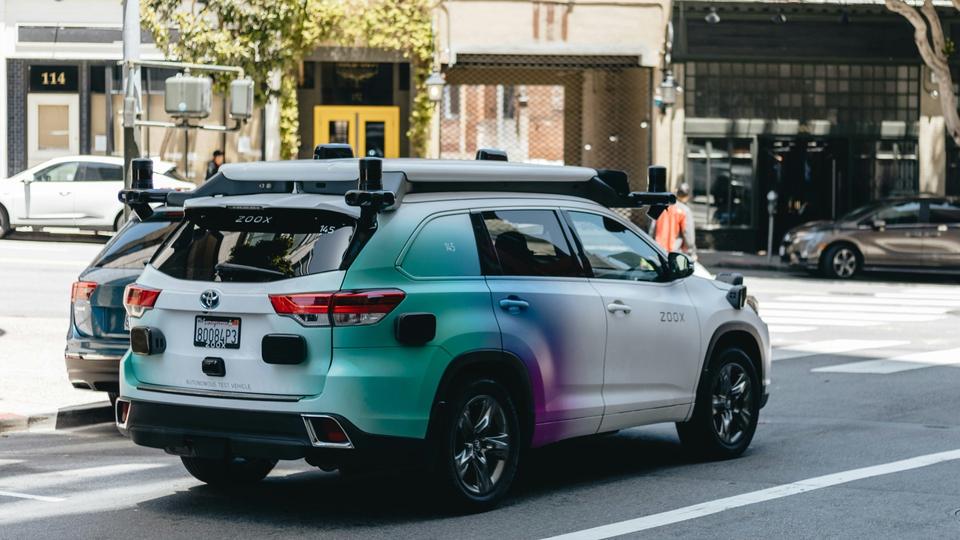
There was a time when the concept of autonomous transportation seemed like something out of an episode of “The Jetsons,” but that time has passed. Though far from perfect, self-driving technology is making strides.
Predictably, investors want in on the action. Many already know that just Uber (UBER) and Lyft (LYFT) disrupted the old school taxi industry, ride-hailing companies are now ripe for self-driving disruption. However, selecting individual robo taxi stocks isn’t everyone’s cup of tea and it can be downright risky. Fortunately, there’s an ETF for that.
The Roundhill Robotaxi, Autonomous Vehicles & Technology ETF (CABZ) debuted in January and the actively managed fund is the first dedicated to autonomous transportation equities, including robo taxi stocks. Likely due in part to investors’ devotion all things artificial intelligence (AI) and semiconductors, CABZ is flying under the radar.
For investors seeking exposure to robo taxi stocks, CABZ is a practical option because it’s actively managed and because the ETF holds 30 stocks, indicating it touches multiple corners of this fast-growing ecosystem. Read on to discover why CABZ could soon shed its anonymity.
For Robo Taxi Stocks, CABZ Calls
Ask advisors and investors to name a robo taxi stock and most will say Tesla (TSLA), but there’s more to this themes story, underscoring the utility of the CABZ approach. Take the case of Uber, the ETF’s second-largest holding at a weight of nearly 6%.
While some market participants view Uber as potentially threatened by self-driving tech, other experts believe the ride-hailing giant is positioned as one of the “beneficiaries of the self-driving as well, because to me, the harder thing to build out is the network rather than the underlying self-driving car. I think that technology is probably more likely to be commoditised than the network is the really difficult thing to build out,” according to the Acquirer’s Multiple.
Beyond the consumer-facing names such as Tesla and Uber, some “background” players are viewed as possible robo taxi stock winners, including China’s Hesai Group and Mobileye, both of which are CABZ holdings. Those CABZ member firms are purveyors of vehicle sensing technology, which is crucial to self-driving’s future.
“Vehicle sensing technology is critical to the development of this industry, and there is still intense competition among firms developing light detection and ranging (lidar) tools, perception systems, and related components,” according to MarketBeat.com. “Many of these companies are on the smaller side and will rely on the success of their R&D to continue growing, making them at least moderately risky ventures.”
Some of that risk can be defrayed by spreading bets around as CABZ does.
Compelling Outlook For Robo Taxi Stocks
Regardless of underlying theme, thematic ETFs experience periods of turbulence. CABZ is no exception, but patient, risk-tolerant investors that don’t bite off more than they can chew can be rewarded by this ETF. Robo taxi growth estimates confirm as much.
“The global robotaxi market is projected to reach approximately $415 billion in 2035, with the US portion alone estimated at $48 billion,” according to Goldman Sachs. “Autonomous trucking is expected to become cheaper per mile than human-driven trucks in 2028 in the US, with the global AV trucking market potentially reaching $560 billion in 2035.”
